C7 vs C9 Christmas Bulbs: Which Should I Choose?
Choosing between C7 and C9 Christmas lights is one of the most common dilemmas in holiday decorating. Both feature the nostalgic, pointed “bullet” shape that defines classic holiday displays, but their scale, socket sizing, and visibility serve different decorating goals.
Pictured in this photo from left to right:
- C9 Glass (Incandescent) Traditional White Bulb
- C9 Smooth Warm White LED Bulb
- C7 Smooth Warm White LED Bulb
- C7 Glass (Incandescent) Traditional White Bulb
Here is a breakdown of how the two compare and how to choose the right fit for your home.
Key Differences: The Quick Specs
- Bulb Size: C7 bulbs measure approximately 2 inches tall and 1 inch wide. C9 bulbs are larger, measuring roughly 3 inches tall and 1.25 inches across.
- Socket / Base Size: C7 bulbs use an E12 candelabra base, while C9 bulbs use a larger E17 intermediate base. The bulbs and cords are not interchangeable.
- Best Viewing Distance: C7s are best appreciated up close (within 20 to 30 feet). C9s are designed to be seen clearly from the curb, street, or from greater distances.
Core Factors to Consider
1. Viewing Distance and Scale
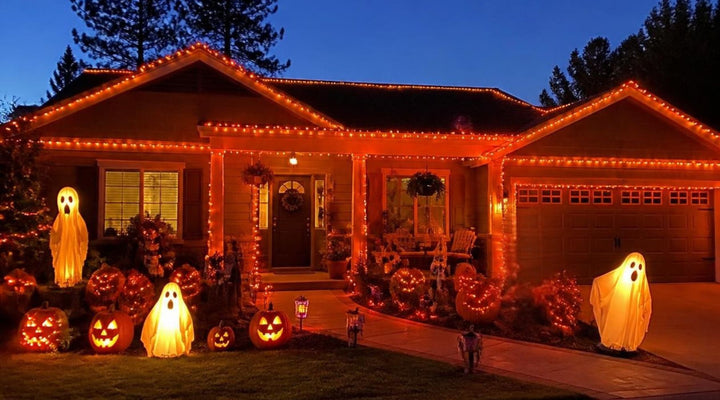
- Rooflines and Second Stories: C9 lights are the industry standard for exterior gutters, roof ridges, and large outdoor trees. Their scale ensures they stand out against expansive facades and can be seen easily from passing cars.
- Porches, Windows, and Smaller Trees: C7 lights work exceptionally well for ground-level architectural trim, railings, window frames, smaller yard trees, and indoor live Christmas trees where C9s might overwhelm the branches.
2. Visual Impact and Brightness
- C9 Bulbs: Deliver a bold, high-contrast outline with maximum curb appeal.
- C7 Bulbs: Provide a charming, vintage glow that feels understated and intimate.
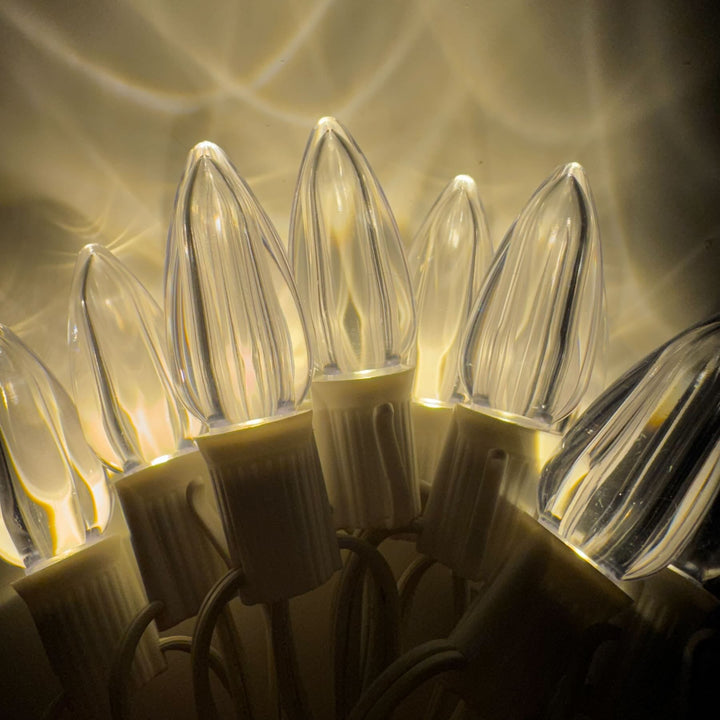
- Lens Style: If you choose LED retrofits, smooth opaque (ceramic-look) bulbs give a soft, nostalgic look, while faceted lenses disperse light in bright, sparkling diamond patterns.
3. Power Consumption (Incandescent vs. LED)
- Traditional Incandescent: Standard C7 incandescent bulbs draw roughly 5 watts each, while incandescent C9 bulbs typically draw 7 to 10 watts each. Because C9s pull roughly 40% to 100% more power per socket, circuit capacity limits how many bulbs you can safely run on a single continuous run.
- LED Retrofit Bulbs: Modern LED retrofit bulbs draw less than 1 watt per bulb (typically 0.6W to 0.8W). Switching to LED virtually eliminates circuit load issues and allows hundreds of feet to run on a single plug without overloading standard 15-amp household breakers.
Direct Comparison: Pros and Cons
C7 Lights
-
Pros:
- Ideal scale for smaller trees, railings, and intimate architectural details.
- Lighter in weight, making them gentle on tree branches and easier to support.
- Traditional E12 base allows versatile seasonal use indoors and out.
-
Cons:
- Can get lost visually on high peaks, wide eaves, or homes set far back from the street.
C9 Lights
-
Pros:
- Unmatched curb appeal and bold visual presence from a distance.
- The traditional standard for clean, professional-looking rooflines.
- Durable E17 bases paired with heavy-duty commercial SPT wire.
-
Cons:
- Larger footprint and heavier weight require sturdy clips and secure mounting.
- Can look oversized on small shrubs or indoor greenery.
Pro Installation Tips
- Measure Before You Buy: Walk the perimeter of your roofline or eaves with a measuring tape or rolling wheel, factoring in vertical drops to ground outlets.
- Match Spacing to the Job: 12-inch bulb spacing is the most popular standard for rooflines. For a denser, high-end display, drop down to 8-inch spacing; for sprawling trees or long perimeter runs, 15-inch or 18-inch spacing provides broad coverage without overcrowding.
- Calculate Your Electrical Load: If using incandescent bulbs, keep total wattage per run under 80% of your cord and circuit rating (never exceed 432 watts on standard 18 AWG SPT-1 wire). For long, continuous runs without math headaches, opt for LED.
- Test Strands First: Always lay out and plug in light cords on the ground before climbing the ladder.
- Use Purpose-Built Clips: Skip staples, nails, and zip ties on siding and shingles. Use all-in-one shingle/gutter clips to keep bulbs standing straight and uniform without damaging your home's exterior.
-
Install Bulbs Base-First (for Empty Socket Wire): If you are using custom-cut bulk spool wire, hang your empty socket line first using your clips, then screw in your bulbs. This prevents accidental breakage while handling the cords on a ladder.
Originally published April 2023, updated October 2026